UNINET® Blog
| TRANSFER NEWS
DTF Vs White Toner - A Closer Look
Which method is right for your business?

If you're comparing white toner vs. DTF printing for your shop, you've likely discovered that both technologies can print white ink on dark materials, but that's where the similarities end. These two printing methods solve the same fundamental problem through entirely different approaches, and choosing the wrong one can saddle your business with maintenance headaches, hidden costs, or production limitations that stunt your growth. By the end of this article, you will know exactly which technology fits your volume, substrate needs, maintenance tolerance, and budget. With both technologies reaching maturity in 2026, there has never been a better time to invest, provided you make the right call for your specific operation.
Understanding the Core Technologies: White Toner vs. DTF Printing.
White toner printing uses a laser-based dry powder toner system configured with CMYK plus white toner. The process fuses toner onto substrates through heat and pressure, similar to how a color laser printer operates, but engineered specifically for transfer papers and direct-to-substrate applications. There are no liquids, no print heads to clog, and no powders to manage. The printer deposits dry toner particles onto a transfer sheet or directly onto the substrate, then a heat press or fuser unit bonds the image permanently.
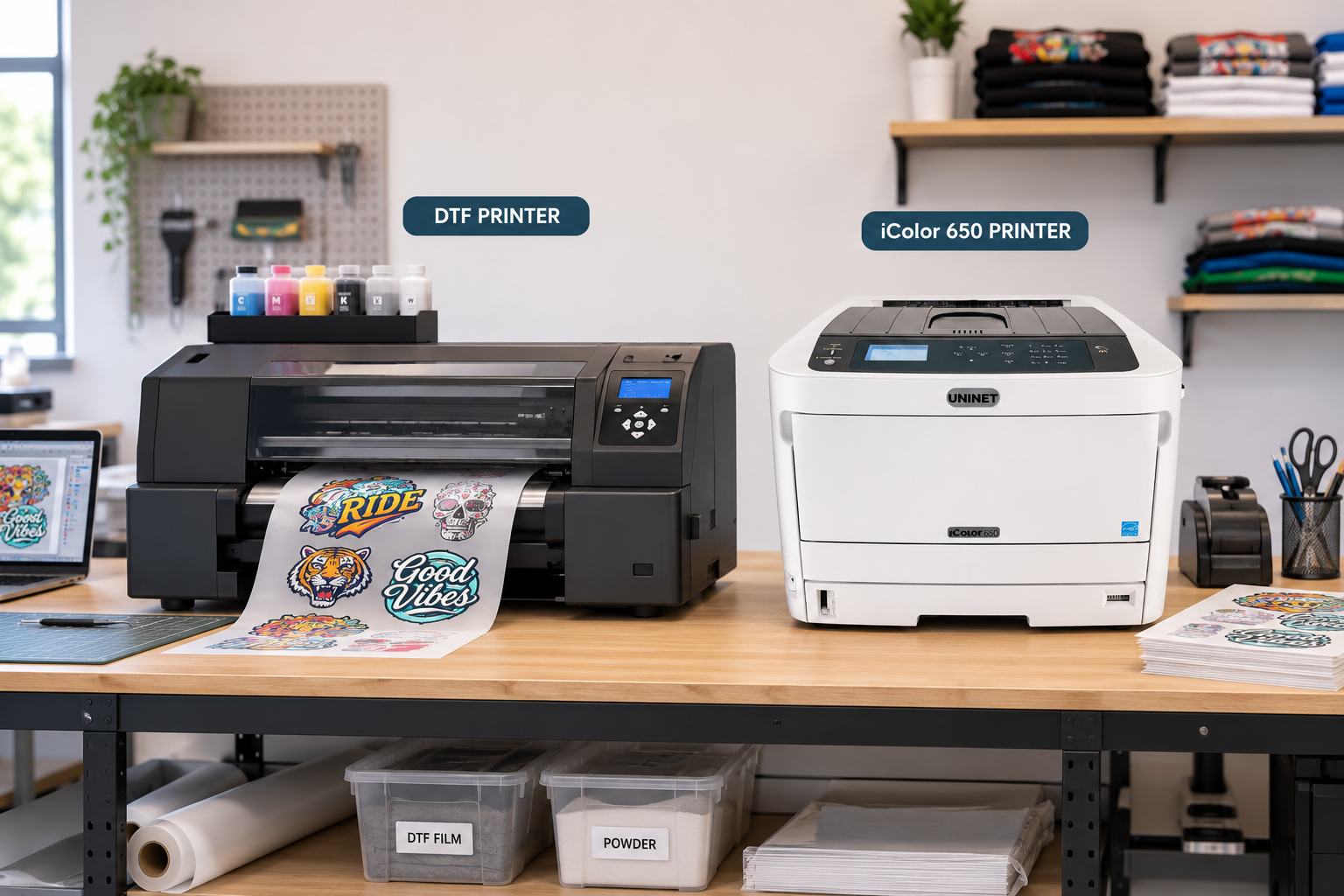
DTF, or Direct-to-Film Printing, takes a fundamentally different approach. It uses liquid inkjet inks, including white pigment ink, printed onto a specialized PET transfer film. While the ink is still wet, an adhesive powder is applied to the printed image, shaken to remove excess, and then cured in an oven or with a heat press. The resulting transfer is then heat-pressed onto the final substrate, typically fabric. The white ink layer serves as an underbase, allowing colors to pop on dark materials.
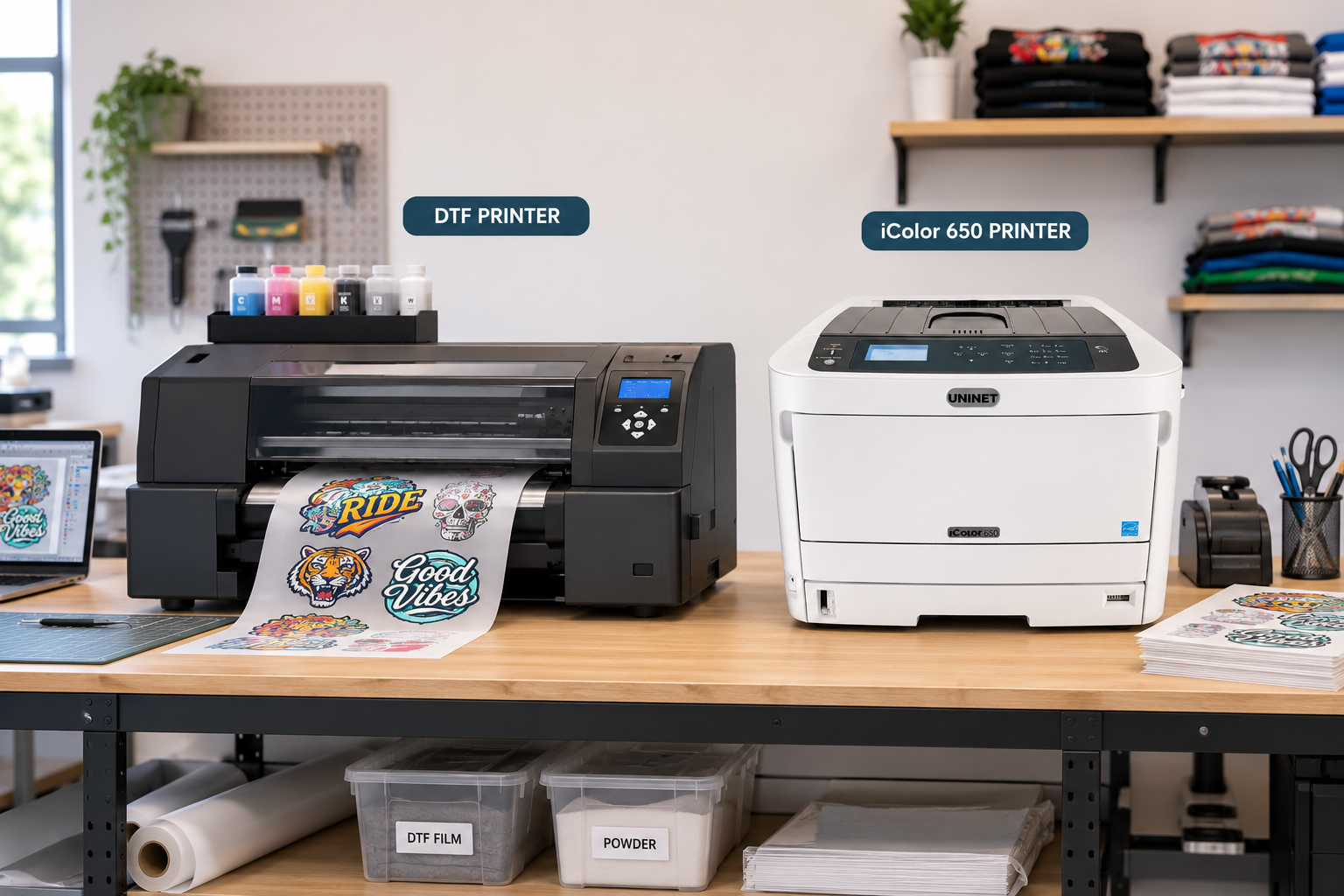
The fundamental difference comes down to wet versus dry. White toner is a dry process with no liquid inks to manage, no print head cleaning cycles, and no adhesive powder. DTF printing relies entirely on liquid ink that requires constant circulation through the print heads to prevent clogging, plus the additional complexity of powder application and curing. White toner printers like the UNINET IColor series arrive as all-in-one systems ready to produce transfers. DTF printing setups typically require separate components: the printer itself, a powder applicator and shaker, a curing oven, and a heat press, each adding cost and floor space.
For buyers evaluating equipment in 2026, the distinction is clear. White toner printing has matured into a true plug-and-play solution that asks very little of the operator. DTF printing remains a multi-step production process that rewards volume and punishes neglect.
Cost Comparison: Initial Investment vs. Per-Print Economics.
Upfront Equipment Costs
White toner printers can be purchased for under $4,000, with all-in-one units that include the printer, starter transfer papers, and initial toner supplies. The UNINET IColor 560, for example, ships as a complete system requiring only a heat press to begin production. There are no additional curing stations, powder applicators, or ventilation systems to purchase.
Dedicated DTF printer setups range from $3,000 to $25,000 for the printer alone, but that figure tells only part of the story. A powder applicator and shaker adds $1,500 to $3,000. A curing oven runs $2,000 to $5,000 depending on capacity and automation level. A quality heat press adds another $500 to $2,000. Hidden costs stack up quickly: ventilation systems for fume extraction, dehumidifiers to keep adhesive powder from absorbing moisture and ruining adhesion, and RIP software licenses that typically cost $300 to $600 annually. When you tally everything required to produce a finished DTF transfer, the all-in cost frequently exceeds a white toner setup.

Per-Print Cost Analysis
DTF printing earns its reputation for affordability at scale. Per-transfer costs run approximately $0.15 to $0.50 depending on image size and ink coverage, making it the clear winner for high-volume fabric production. White toner printing per-print costs are higher, typically $0.50 to $2.00 per transfer due to toner consumption and the specialized transfer papers required, but that does not tell the whole story!
However, DTF printing carries a hidden cost that rarely appears in competitor comparisons: ink-cycling waste. DTF printers intentionally cycle ink through the print heads to prevent clogging, a process that consumes ink even when the machine sits idle. Depending on usage patterns, 10 to 20 percent of total ink volume goes to waste through cycling and cleaning cycles, not onto transfers that generate revenue. For shops with inconsistent order volumes, this waste erodes the per-print cost advantage.
The ROI tipping point favors white toner printing for shops producing fewer than 500 transfers per week. At those volumes, white toner's lower equipment cost, minimal waste, and near-zero maintenance expenses offset the higher per-transfer material costs. DTF's cost advantage only materializes when production volume is high enough to absorb the waste and justify the equipment investment.
Maintenance and Workflow: The Plug-and-Play Advantage
White toner maintenance is refreshingly simple. Replace toner cartridges when they run low, clean the fuser unit periodically, and keep the machine free of dust. There are no print heads to clean, no ink lines to purge, no adhesive powder to manage, and no curing ovens to calibrate. A white toner printer can sit idle for weeks and resume printing immediately with no preparation and no waste.
DTF maintenance demands daily attention. Print heads require cleaning cycles to prevent clogs, a process that consumes ink and time. Ink lines need purging if the printer sits unused for more than 48 hours. The powder applicator must be cleaned after each session to prevent buildup that ruins transfer quality. Adhesive powder is hygroscopic, meaning it absorbs moisture from the air. In humid environments, powder management becomes a constant battle requiring dehumidifiers and sealed storage containers.
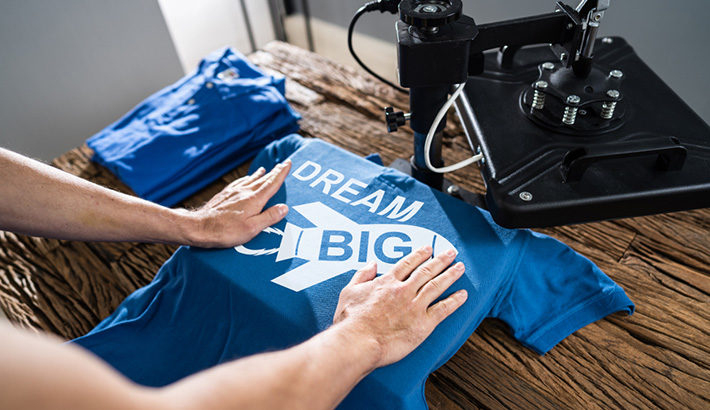
The workflow difference is equally stark. White toner uses weedless transfer paper: print your design, cut the sheet, and press it onto the substrate. Two steps from printer to finished product. DTF requires four distinct stages: print onto film, apply adhesive powder, cure the powder-coated film, and heat press onto the substrate. Each stage introduces quality control checkpoints and opportunities for error.
Downtime risk separates these technologies decisively. A DTF printer left idle for more than 48 hours risks clogged print heads that require expensive cleaning cartridges or professional service calls. A white toner printer can sit for weeks and resume printing immediately. For businesses in 2026 that cannot dedicate daily attention to their printing equipment, white toner is the safer investment. DTF demands an operator who treats the equipment as a daily responsibility.
Substrate Versatility: Where Each Technology Excels.
White Toner's Multi-Substrate Advantage
White toner prints on virtually any surface that can withstand the heat and pressure of the transfer process. Ceramics, wood, metal, acrylic, glass, leather, stone, plastic, and signage materials all accept white toner transfers with proper preparation. This versatility opens revenue streams far beyond apparel: promotional products, personalized gifts, restaurant menus, interior signage, stickers, labels, and custom hard-surface items.
A unique application highlighted by UNINET IColor involves restaurants using a single white toner printer to produce menus, table tents, signage, kids' coloring pages, and promotional materials. No other printing technology covers that range of substrates from one machine. For print shops serving diverse client needs, white toner printing eliminates the need to outsource hard-surface work or invest in multiple printing systems.
DTF's Fabric Focus
DTF printing is optimized for textiles and performs best on fabric or fabric-like materials. T-shirts, hoodies, tote bags, hats, and other apparel items represent the core market. On these substrates, DTF delivers superior stretchability and a softer hand feel compared to white toner transfers, which can feel thicker and slightly plastic-like on fabric.
The limitation is absolute: DTF cannot print directly onto hard surfaces. The transfer process requires the adhesive powder to bond with fibers, making it unsuitable for ceramics, metal, wood, or rigid plastics. Shops that want to offer hard-surface products alongside apparel must either add a white toner printer or turn away that business.
A combination strategy deserves consideration for busy shops. Running both technologies, DTF for high-volume apparel orders and white toner for hard-surface products plus short-run fabric jobs, covers the full spectrum of customer demand. The combined investment of $15,000 to $20,000 can be recovered faster than committing to one technology that limits your addressable market.
Print Quality, Durability, and Feel
Durability and Wash Testing
Published wash test data remains scarce for both technologies, making direct empirical comparison difficult. Based on industry reports and user experience, DTF transfers typically withstand 30 to 50 washes with proper curing and application. White toner transfers average 20 to 40 washes on fabric with good adhesion, though results vary with substrate preparation and washing conditions.
On fabric, white toner prints feel thicker and have a slight plastic-like texture that some customers notice. DTF transfers produce a softer hand feel that more closely mimics screen printing, a meaningful advantage for apparel-focused businesses where garment feel drives customer satisfaction.
On hard surfaces, the comparison flips entirely. White toner bonds permanently through heat fusion, creating a durable finish that resists peeling, cracking, and fading under normal use conditions. DTF simply cannot compete in this category because the technology is not designed for hard-surface applications.
Resolution and Detail
White toner printers typically operate at 600 to 1200 DPI, producing sharp text and clean fine details well-suited for signage, labels, and text-heavy designs. The dry toner process delivers crisp edges that hold up well on both fabric and hard surfaces.
DTF printers vary widely in resolution depending on the base printer. Converted Epson models and dedicated industrial units range from 720 to 1440 DPI, with higher-end machines producing smoother photographic gradients and subtle color transitions. For photo-realistic images on apparel, DTF often holds an edge in visual quality. For text-heavy designs and hard-surface applications where crispness matters most, white toner delivers superior results.
Environmental and Health Considerations
DTF printing raises legitimate environmental and health concerns that deserve attention. Liquid DTF inks contain volatile organic compounds that off-gas during printing and curing. Adhesive powder creates airborne particulates during application and shaking. Curing ovens emit fumes that require dedicated ventilation systems, adding cost and complexity to the workspace. These factors make DTF less suitable for home-based businesses or retail-adjacent print shops where fumes and particulates could affect customers or living spaces.
White toner's dry process produces minimal airborne particles and no liquid chemicals to store, handle, or dispose of. Energy consumption runs lower because there is no curing oven or powder applicator drawing power. Waste streams are simpler: used transfer paper and empty toner cartridges versus DTF's combination of non-recyclable PET film, excess powder, and ink cartridges.
For 2026, regulatory trends matter. Several states are tightening VOC emission standards for print shops and manufacturing facilities. White toner's dry process may offer compliance advantages that simplify permitting and reduce regulatory exposure compared to solvent-based or liquid-ink printing systems.
Decision Framework: Which Technology Fits Your Business?
Choose White Toner If:
You want minimal maintenance and the flexibility to print when you need to, not on a schedule dictated by equipment demands. You print on a variety of substrates beyond just fabric and want to capture revenue from hard-surface products, signage, and promotional items. Your volume runs under 500 transfers per week, making the higher per-print material cost less significant than DTF's equipment and maintenance overhead. You value simplicity and want staff to start producing with minimal training. You need a printer that can sit idle for days or weeks without clogging, wasting ink, or requiring preparation before the next job.
Choose DTF If:
You are producing 500 or more fabric transfers per week and need the lowest possible per-print cost to maintain margins at scale. You have dedicated staff who can perform daily maintenance, manage powder application, and monitor print head health as part of their routine. You have proper ventilation and workspace to accommodate powder application equipment, a curing oven, and fume extraction. You primarily serve the apparel market and do not need hard-surface printing capability. You are prepared for the ongoing operational attention that liquid ink systems demand.
The 2026 Combination Strategy
Shops with diverse client needs should evaluate running both technologies. Use DTF printing for high-volume apparel orders where per-print cost and fabric feel matter most. Use white toner for hard-surface products, short-run fabric jobs, and quick-turnaround work that cannot wait for DTF's multi-step workflow. The combined investment can pay for itself faster than committing to one technology that limits your market, particularly if you already have customers asking for products outside your current capability.
Frequently Asked Questions
Can a DTF printer print white?
Yes, DTF printers use a CMYK plus white ink configuration, with white ink printed as a base layer under color inks. This is a common point of confusion for new buyers who assume white ink capability requires a specialized machine.
What are the disadvantages of DTF printers?
Daily maintenance requirements, ink waste through cycling and cleaning, limitation to fabric substrates, need for ventilation and fume extraction, and the ongoing challenge of adhesive powder management in humid environments.
What is the best printer to convert to DTF?
Epson EcoTank models, including the L1800, ET-15000, and ET-8550 are popular conversion candidates, but converted printers lack warranty support and may suffer reliability issues compared to dedicated DTF systems designed for the workload.
Can I use a regular printer for DTF printing?
No. Standard inkjet printers cannot handle the thick white pigment ink required for DTF. You need a printer with a modified ink delivery system and specialized print heads engineered for pigment ink viscosity.
How long do white toner transfers last?
With proper application, white toner transfers on fabric typically last 20 to 40 washes. On hard surfaces, the bond is permanent under normal use conditions, with no peeling or cracking over time.
Conclusion: Making Your 2026 Investment Decision
The core trade-off is straightforward: DTF printing wins on per-print cost and fabric feel for high-volume apparel production. White toner printing wins on versatility, maintenance simplicity, and ease of use across a broad range of substrates. For most small to mid-size shops, white toner is the smarter choice. Low maintenance and high versatility make it the safer, more profitable investment for businesses that cannot dedicate daily attention to their printing equipment. Evaluate your actual production volume, your substrate needs, and your tolerance for ongoing maintenance, not just the upfront price tag. Explore UNINET IColor white toner solutions for a plug-and-play printing experience that grows with your business and never punishes you for taking a day off.